• Use promo code [xxxxxxx] to buy 2+ items for an extra 15% off.
  • Use promo code [xxxxxxx] to buy 2+ items for an extra 15% off.
  • Use promo code [xxxxxxx] to buy 2+ items for an extra 15% off.
  • Chinese (Simplified)

  • English

  • German

  • Korean

  • Spanish

United States (English / $ USD)

Rabbit anti-Human ALPL Polyclonal Antibody

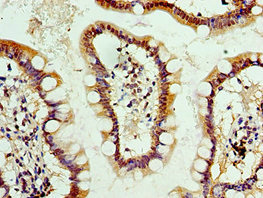
The antibody against ALPL was raised in rabbit using the Recombinant Human Alkaline phosphatase, tissue-nonspecific isozyme protein (20-270AA) as the immunogen. This antibody exists as a non-conjugated isotype IgG, Antigen affinity purified. This antibody has been validated on ELISA, IHC.

ADC-40459A

The antibody against ALPL was raised in rabbit using the Recombinant Human Alkaline phosphatase, tissue-nonspecific isozyme protein (20-270AA) as the immunogen. This antibody exists as a non-conjugated isotype IgG, Antigen affinity purified. This antibody has been validated on ELISA, IHC.

$299.00

Number
Order Exclusive Products Now

Request a Quote
High Purity LevelsPrecision and ReliabilityCustomization Options

Main Attributes


Cat.No ADC-40459A ClonalityPolyclonal
Host SpeciesRabbitTarget NameALPL
Target SynonymsAKP2 antibody; Alkaline phosphatase liver/bone/kidney antibody; Alkaline phosphatase liver/bone/kidney isozyme antibody; Alkaline phosphatase tissue nonspecific isozyme antibody; Alkaline phosphataseFormLiquid
Species ReactivityHumanIsotypeIgG
Storage Buffer50% Glycerol, PBS with 0.02% sodium azide, pH7.3.Purification MethodAntigen affinity purified
ConjugateNon-conjugatedApplicationELISA, IHC
StorageUpon receipt

Others Attributes


Immunogen DescriptionRecombinant Human Alkaline phosphatase, tissue-nonspecific isozyme protein (20-270AA)Target SpeciesHuman
Immunogen Sequenceand peptides are available upon request., Complete sequences for the immunogen, target proteinUniprot IDP05186
Background Information
  • Uniprot Id

    P05186

  • Target Species

    Human

  • Target Name

    ALPL

  • Target Full Name

    Alkaline phosphatase, tissue-nonspecific isozyme

  • Target Function

    Alkaline phosphatase that metabolizes various phosphate compounds and plays a key role in skeletal mineralization and adaptive thermogenesis. Has broad substrate specificity and can hydrolyze a considerable variety of compounds: however, only a few substrates, such as diphosphate (inorganic pyrophosphate; PPi), pyridoxal 5'-phosphate (PLP) and N-phosphocreatine are natural substrates. Plays an essential role in skeletal and dental mineralization via its ability to hydrolyze extracellular diphosphate, a potent mineralization inhibitor, to phosphate: it thereby promotes hydroxyapatite crystal formation and increases inorganic phosphate concentration. Acts in a non-redundant manner with PHOSPHO1 in skeletal mineralization: while PHOSPHO1 mediates the initiation of hydroxyapatite crystallization in the matrix vesicles (MVs), ALPL/TNAP catalyzes the spread of hydroxyapatite crystallization in the extracellular matrix. Also promotes dephosphorylation of osteopontin (SSP1), an inhibitor of hydroxyapatite crystallization in its phosphorylated state; it is however unclear whether ALPL/TNAP mediates SSP1 dephosphorylation via a direct or indirect manner. Catalyzes dephosphorylation of PLP to pyridoxal (PL), the transportable form of vitamin B6, in order to provide a sufficient amount of PLP in the brain, an essential cofactor for enzymes catalyzing the synthesis of diverse neurotransmitters. Additionally, also able to mediate ATP degradation in a stepwise manner to adenosine, thereby regulating the availability of ligands for purinergic receptors. Also capable of dephosphorylating microbial products, such as lipopolysaccharides (LPS) as well as other phosphorylated small-molecules, such as poly-inosine:cytosine (poly I:C). Acts as a key regulator of adaptive thermogenesis as part of the futile creatine cycle: localizes to the mitochondria of thermogenic fat cells and acts by mediating hydrolysis of N-phosphocreatine to initiate a futile cycle of creatine dephosphorylation and phosphorylation. During the futile creatine cycle, creatine and N-phosphocreatine are in a futile cycle, which dissipates the high energy charge of N-phosphocreatine as heat without performing any mechanical or chemical work.

  • Target Involvement

    Hypophosphatasia (HOPS); Hypophosphatasia childhood type (HOPSC); Hypophosphatasia infantile type (HOPSI)

  • Target Subcellular Location

    Cell membrane; Lipid-anchor, GPI-anchor. Extracellular vesicle membrane; Lipid-anchor, GPI-anchor. Mitochondrion membrane; Lipid-anchor, GPI-anchor. Mitochondrion intermembrane space.

  • Target Protein Families

    Alkaline phosphatase family

  • Target Synonyms

    HOPS; HPPA; HPPC; HPPI; HPPO; TNAP; TNALP; APTNAP; TNSALP; AP-TNAP; TNS-ALP; Alkaline Phosphatase (ALPL)

  • Target Background

    This gene encodes a member of the alkaline phosphatase family of proteins. There are at least four distinct but related alkaline phosphatases: intestinal, placental, placental-like, and liver/bone/kidney (tissue non-specific). The first three are located together on chromosome 2, while the tissue non-specific form is located on chromosome 1. The product of this gene is a membrane bound glycosylated enzyme that is not expressed in any particular tissue and is, therefore, referred to as the tissue-nonspecific form of the enzyme. Alternative splicing results in multiple transcript variants, at least one of which encodes a preproprotein that is proteolytically processed to generate the mature enzyme. This enzyme may play a role in bone mineralization. Mutations in this gene have been linked to hypophosphatasia, a disorder that is characterized by hypercalcemia and skeletal defects.

Inquire Rabbit anti-Human ALPL Polyclonal Antibody Now


ADV Biomart respects your privacy and protects your personal data in accordance with ADV Biomart. For more information, please see our data protection statement. *

Notification