-
Chinese (Simplified)
-
English
-
German
-
Korean
-
Spanish
Chinese (Simplified)
English
German
Korean
Spanish
Sign up for an account to enjoy easy online shopping and instant order tracking.
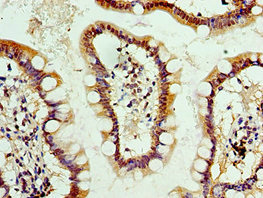
The antibody against ALPL was raised in rabbit using the Recombinant Human Alkaline phosphatase, tissue-nonspecific isozyme protein (20-270AA) as the immunogen. This antibody exists as a non-conjugated isotype IgG, Antigen affinity purified. This antibody has been validated on ELISA, IHC.
$299.00
| Cat.No | ADC-40459A | Clonality | Polyclonal |
|---|---|---|---|
| Host Species | Rabbit | Target Name | ALPL |
| Target Synonyms | AKP2 antibody; Alkaline phosphatase liver/bone/kidney antibody; Alkaline phosphatase liver/bone/kidney isozyme antibody; Alkaline phosphatase tissue nonspecific isozyme antibody; Alkaline phosphatase | Form | Liquid |
| Species Reactivity | Human | Isotype | IgG |
| Storage Buffer | 50% Glycerol, PBS with 0.02% sodium azide, pH7.3. | Purification Method | Antigen affinity purified |
| Conjugate | Non-conjugated | Application | ELISA, IHC |
| Storage | Upon receipt |
| Immunogen Description | Recombinant Human Alkaline phosphatase, tissue-nonspecific isozyme protein (20-270AA) | Target Species | Human |
|---|---|---|---|
| Immunogen Sequence | and peptides are available upon request., Complete sequences for the immunogen, target protein | Uniprot ID | P05186 |
Uniprot Id
P05186
Target Species
Human
Target Name
ALPL
Target Full Name
Alkaline phosphatase, tissue-nonspecific isozyme
Target Function
Alkaline phosphatase that metabolizes various phosphate compounds and plays a key role in skeletal mineralization and adaptive thermogenesis. Has broad substrate specificity and can hydrolyze a considerable variety of compounds: however, only a few substrates, such as diphosphate (inorganic pyrophosphate; PPi), pyridoxal 5'-phosphate (PLP) and N-phosphocreatine are natural substrates. Plays an essential role in skeletal and dental mineralization via its ability to hydrolyze extracellular diphosphate, a potent mineralization inhibitor, to phosphate: it thereby promotes hydroxyapatite crystal formation and increases inorganic phosphate concentration. Acts in a non-redundant manner with PHOSPHO1 in skeletal mineralization: while PHOSPHO1 mediates the initiation of hydroxyapatite crystallization in the matrix vesicles (MVs), ALPL/TNAP catalyzes the spread of hydroxyapatite crystallization in the extracellular matrix. Also promotes dephosphorylation of osteopontin (SSP1), an inhibitor of hydroxyapatite crystallization in its phosphorylated state; it is however unclear whether ALPL/TNAP mediates SSP1 dephosphorylation via a direct or indirect manner. Catalyzes dephosphorylation of PLP to pyridoxal (PL), the transportable form of vitamin B6, in order to provide a sufficient amount of PLP in the brain, an essential cofactor for enzymes catalyzing the synthesis of diverse neurotransmitters. Additionally, also able to mediate ATP degradation in a stepwise manner to adenosine, thereby regulating the availability of ligands for purinergic receptors. Also capable of dephosphorylating microbial products, such as lipopolysaccharides (LPS) as well as other phosphorylated small-molecules, such as poly-inosine:cytosine (poly I:C). Acts as a key regulator of adaptive thermogenesis as part of the futile creatine cycle: localizes to the mitochondria of thermogenic fat cells and acts by mediating hydrolysis of N-phosphocreatine to initiate a futile cycle of creatine dephosphorylation and phosphorylation. During the futile creatine cycle, creatine and N-phosphocreatine are in a futile cycle, which dissipates the high energy charge of N-phosphocreatine as heat without performing any mechanical or chemical work.
Target Involvement
Hypophosphatasia (HOPS); Hypophosphatasia childhood type (HOPSC); Hypophosphatasia infantile type (HOPSI)
Target Subcellular Location
Cell membrane; Lipid-anchor, GPI-anchor. Extracellular vesicle membrane; Lipid-anchor, GPI-anchor. Mitochondrion membrane; Lipid-anchor, GPI-anchor. Mitochondrion intermembrane space.
Target Protein Families
Alkaline phosphatase family
Target Synonyms
HOPS; HPPA; HPPC; HPPI; HPPO; TNAP; TNALP; APTNAP; TNSALP; AP-TNAP; TNS-ALP; Alkaline Phosphatase (ALPL)
Target Background
This gene encodes a member of the alkaline phosphatase family of proteins. There are at least four distinct but related alkaline phosphatases: intestinal, placental, placental-like, and liver/bone/kidney (tissue non-specific). The first three are located together on chromosome 2, while the tissue non-specific form is located on chromosome 1. The product of this gene is a membrane bound glycosylated enzyme that is not expressed in any particular tissue and is, therefore, referred to as the tissue-nonspecific form of the enzyme. Alternative splicing results in multiple transcript variants, at least one of which encodes a preproprotein that is proteolytically processed to generate the mature enzyme. This enzyme may play a role in bone mineralization. Mutations in this gene have been linked to hypophosphatasia, a disorder that is characterized by hypercalcemia and skeletal defects.
Notification